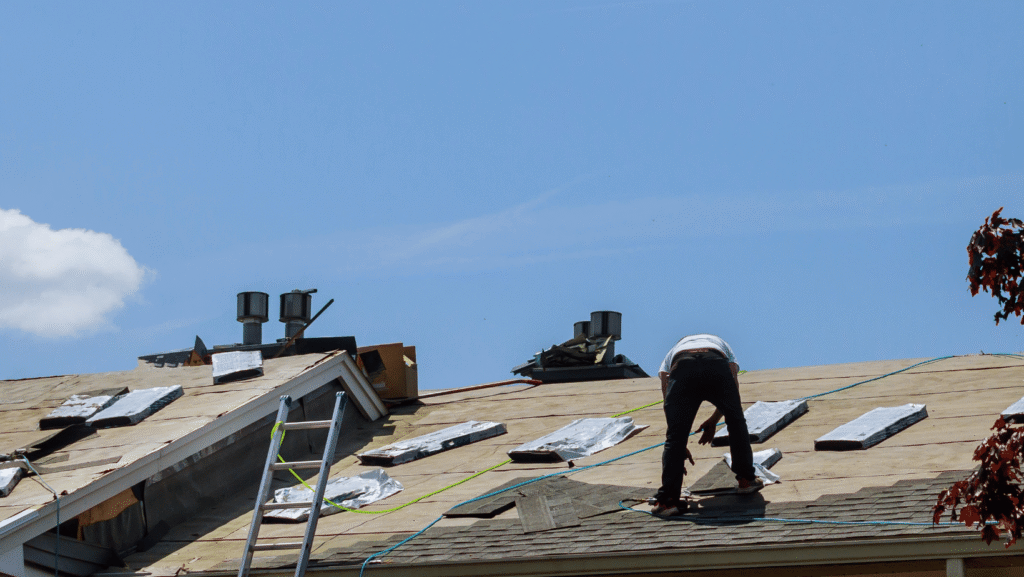
For many homeowners in the St. Louis region, the roof is an afterthought until water starts dripping into the attic. However, the period between a major storm and the first sign of a leak is a critical window. If you can identify damage early, you can prevent structural rot, mold growth, and the loss of your home’s insulation value. Because Missouri weather can transition from a 70-degree afternoon to a freezing thunderstorm in hours, your roof is constantly under thermal stress, making even minor damage escalate quickly.
The Ground-Level Survey
Safety should always be the priority. You do not need to get on a ladder to perform an initial post-storm check. After the wind dies down and the rain stops, walk around your property and look for the obvious red flags.
First, look for shingle debris. If you find pieces of asphalt or entire shingles in your yard or flower beds, your roof has suffered wind uplift. Modern shingles are rated for high winds, but as they age, the sealant strip that bonds them together can dry out. Once that bond is broken, the wind can lift the shingle, creasing it or tearing it away entirely.
Second, check your downspouts. If you see an unusual amount of dark, sandy grit at the end of your downspout extensions, your shingles are shedding their protective granules. While some granule loss is normal over the life of a roof, a sudden surge after a storm is a clear indicator of hail impact.
Identifying Collateral Damage
If you want to know if your roof is damaged, look at the metal around it. Soft metals like aluminum and thin steel show hail impacts much more clearly than rugged asphalt shingles. Check your gutters and downspouts for small, round indentations. Look at your window screens; if they have small tears or “stars” in the mesh, that is a sign of high-velocity hail.
Check your garage door and your mailbox as well. In St. Louis, we often see storms with directional winds that pelt one side of a house more than the other. If the west-facing side of your mailbox is dented, focus your attention on the west-facing slope of your roof. Even the plastic vents on your roof can be a giveaway; if they are cracked or have holes, the shingles surrounding them have likely been compromised as well.
The Danger of Wind Creasing
Wind damage is often more subtle than hail damage. When high winds catch the edge of a shingle, they lift it upward. This creates a horizontal crease across the top of the shingle where the fiberglass mat has snapped. Even if the shingle settles back down and looks normal from the ground, the waterproof seal is broken. The next time it rains, the wind will drive water up and under that shingle, bypassing your roof’s primary drainage system and soaking the underlayment.
At Anvil Roofing Pros, we use high-resolution imaging to identify these creases. Because they are often invisible from the ground, they are frequently missed by homeowners, yet they are one of the most common causes of slow-burning leaks that eventually lead to black mold in St. Louis attics.
Why a Professional Inspection is Non-Negotiable
While a DIY check is a great first step, it cannot replace a professional assessment. A professional inspector knows how to look for the subtle signs of thermal cracking, mechanical damage, and the specific ways that Missouri’s freeze-thaw cycles interact with storm-damaged materials.
Our team uses 3D modeling to create a comprehensive map of your roof’s health. We look at the flashing around your chimney—a common failure point in older St. Louis homes—and ensure that your drip edges are correctly installed to shed water away from your fascia. By identifying these issues now, you are essentially winterizing your home against the harsh Missouri months ahead.