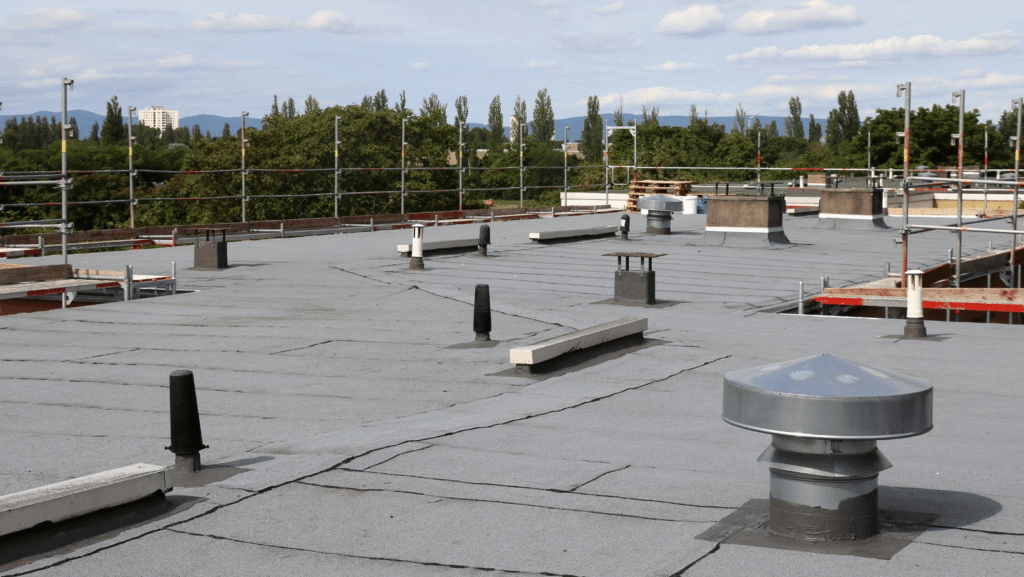
If you manage a commercial property in the Gateway City, you already know that St. Louis weather doesn’t just change by the season—it changes by the hour. We often joke that if you don’t like the weather, just wait ten minutes. But for your building’s roof, those rapid shifts from a 60°F sunny afternoon to a 20°F freezing night are anything but a joke.
In the roofing industry, we call this the freeze-thaw cycle, and in St. Louis, it is the primary silent killer of commercial flat roofs. Whether you are managing a warehouse in Hazelwood, a retail center in Kirkwood, or an office complex in Downtown St. Louis, understanding how our local climate attacks your infrastructure is the first step in preventing a five-figure emergency repair.
The Science of Destruction: What is the Freeze-Thaw Cycle?
The freeze-thaw cycle occurs when water (from rain, melted snow, or ice) seeps into small cracks, pores, or seams in your roofing material. When the temperature drops below freezing, that water turns into ice.
Here is the problem: Water expands by approximately 10% when it freezes.
As the ice expands, it acts like a slow-motion wedge, pushing against your roofing membrane, flashing, and masonry. When the sun comes out and the ice melts (the “thaw”), it leaves behind a gap that is now 10% larger than it was the day before. The next time it rains, more water enters that larger gap, and the process repeats. Over a single St. Louis winter, your roof might go through dozens of these cycles, turning a microscopic hairline fracture into a gushing leak by springtime.
5 Common Ways St. Louis Weather Causes Commercial Roof Leaks
While every building is unique, our crews consistently see the same five issues popping up across St. Louis County and the Metro East during the winter and spring months.
1. Separation of Single-Ply Seams (TPO & EPDM)
Most modern St. Louis commercial buildings use TPO (Thermoplastic Polyolefin) or EPDM (rubber) membranes. While these materials are durable, they expand and contract at different rates than the adhesives or mechanical fasteners holding them down.
- The Freeze-Thaw Impact: As the membrane “shrinks” in the cold, it puts immense tension on the seams. If water has managed to get under a seam edge and freezes, it can “pop” the weld or adhesive bond, creating a direct path for water to enter your insulation.
2. The “Ice Dam” Effect on Flat Roofs
We usually associate ice dams with residential shingles, but they are just as dangerous for flat roofs. On a commercial roof, ice often forms around parapet walls and clogged scuppers.
- The Leak: When snow on the main part of the roof melts due to heat escaping from the building, the water runs toward the cold edges (drains) where it refreezes. This creates a “dam” of ice. Behind that dam, a pool of liquid water sits on your roof for days. Most flat roofs are water-resistant, but they are not designed to be a swimming pool. Eventually, that standing water will find a way through.
3. Flashing Failures Around HVAC Units
St. Louis commercial roofs are often crowded with heavy HVAC units. The “flashing” is the metal stripping that seals the gap between the roof membrane and these units.
- The Freeze-Thaw Impact: Metal, rubber, and sealant all react to temperature changes differently. In St. Louis, the extreme swings cause these materials to pull away from each other. If your sealant has become brittle due to summer UV rays, the winter freeze-thaw cycle will crack it wide open.
4. Masonry and Coping Cap Cracks
Many older buildings in areas like Soulard or the Central West End have brick parapet walls. Water can seep into the mortar joints or under the metal “caps” on top of the walls.
- The Destruction: When water freezes inside a brick wall, it can cause “spalling”—where the face of the brick literally pops off. This doesn’t just cause a roof leak; it creates a structural hazard and masonry debris that can fall onto sidewalks below.
5. Hidden Punctures from “Winter Debris”
St. Louis experiences high winds during storm season. Branches, gravel, or even loose equipment can be blown across a roof.
- The Danger: A small puncture from a falling branch might go unnoticed in January. But as snow sits on the roof, melts, and refreezes inside that puncture, the hole grows. By the time the heavy spring rains arrive in April, you’re looking at saturated insulation and mold growth.
The “Red Flags”: Signs Your Roof is Struggling
You don’t always need to climb a ladder to know your roof is in trouble. Keep an eye out for these localized warning signs:
- Interior Water Stains: Don’t ignore “tea-colored” circles on your ceiling tiles. These are often the first sign that water has bypassed the membrane and is soaking your insulation.
- Bubbles in the Membrane: If you see “blisters” or bubbles on your flat roof, it means air or moisture is trapped underneath. When this freezes, it can cause the membrane to shatter.
- Slow Draining: After a St. Louis rainstorm, your roof should be dry within 48 hours. If you see “ponding water” (puddles) lasting longer, your drainage system is likely compromised.
- Cracked Sealant: Look at the “caulking” around vents and pipes. If it looks like dried-out mud with deep cracks, it’s no longer doing its job.
Prevention: The St. Louis Property Manager’s Checklist
The cost of an emergency commercial roof repair in St. Louis is always higher than the cost of a scheduled maintenance visit. To protect your investment, follow this seasonal plan:
Fall: The Pre-Freeze Prep
- Clear the Drains: Ensure all gutters, scuppers, and internal drains are free of leaves from our Missouri oaks and maples.
- Professional Inspection: Have a contractor check the seam integrity and flashing before the first hard frost (usually late October).
- Secure Rooftop Equipment: Make sure HVAC panels are screwed down so they don’t blow across the membrane during a windstorm.
Winter: The Storm Watch
- Monitor Snow Load: If we get a “Big One” (10+ inches of snow), monitor your roof for signs of structural stress like sagging or new interior cracks.
- Safe Snow Removal: Never use metal shovels on a flat roof. If snow removal is necessary, hire professionals who use plastic-edged tools to avoid puncturing the membrane.
Spring: The Damage Assessment
- Check for Hail Damage: St. Louis is in a high-risk zone for hail. Even if you don’t see a leak, hail can “bruise” a roof, shortening its lifespan by years.
- Clear Debris: Remove any branches or trash that accumulated over the winter to prevent them from clogging drains during spring thunderstorms.
Why Local Expertise Matters
When you search for a St. Louis commercial roofing contractor, you need a partner who understands the specific “micro-climates” of our region. A roof in the open plains of St. Charles County deals with higher wind uplift than a building tucked away in the CWE.
At [Company Name], we have spent years studying how the St. Louis freeze-thaw cycle affects different materials. We don’t just “patch” leaks; we look for the root cause—whether it’s a drainage issue, a failed seam, or thermal movement.
Don’t Wait for the Drip
A small leak in February can become a collapsed ceiling in May. If you suspect your building has been a victim of the Missouri freeze-thaw cycle, the time to act is now.
Would you like us to perform a complimentary “Winter Wellness” drone inspection of your facility? We can provide a detailed report of your roof’s health, identifying potential “freeze-thaw” weak points before they turn into expensive emergencies.
This topic is designed to capture users who are ready to buy but need a reason to choose one system over another. In 2026, the focus is heavily on energy ROI and tax incentives.